Gilbertico Serberie

Text: Eva Breukink
Photography: Studiorootz | Berber van Beek

Fruit paradise

Gilbertico ‘Tico’ Serberie (1990) loves fruit. He is passionate to see the fruits grow. The planting, pruning, and taking care of them. Picking them at just the right moment. It means the world to him. His field is full of fruit trees. Lime, papaya, coconut, banana… And especially a lot of soursop, known as sòrsaka.

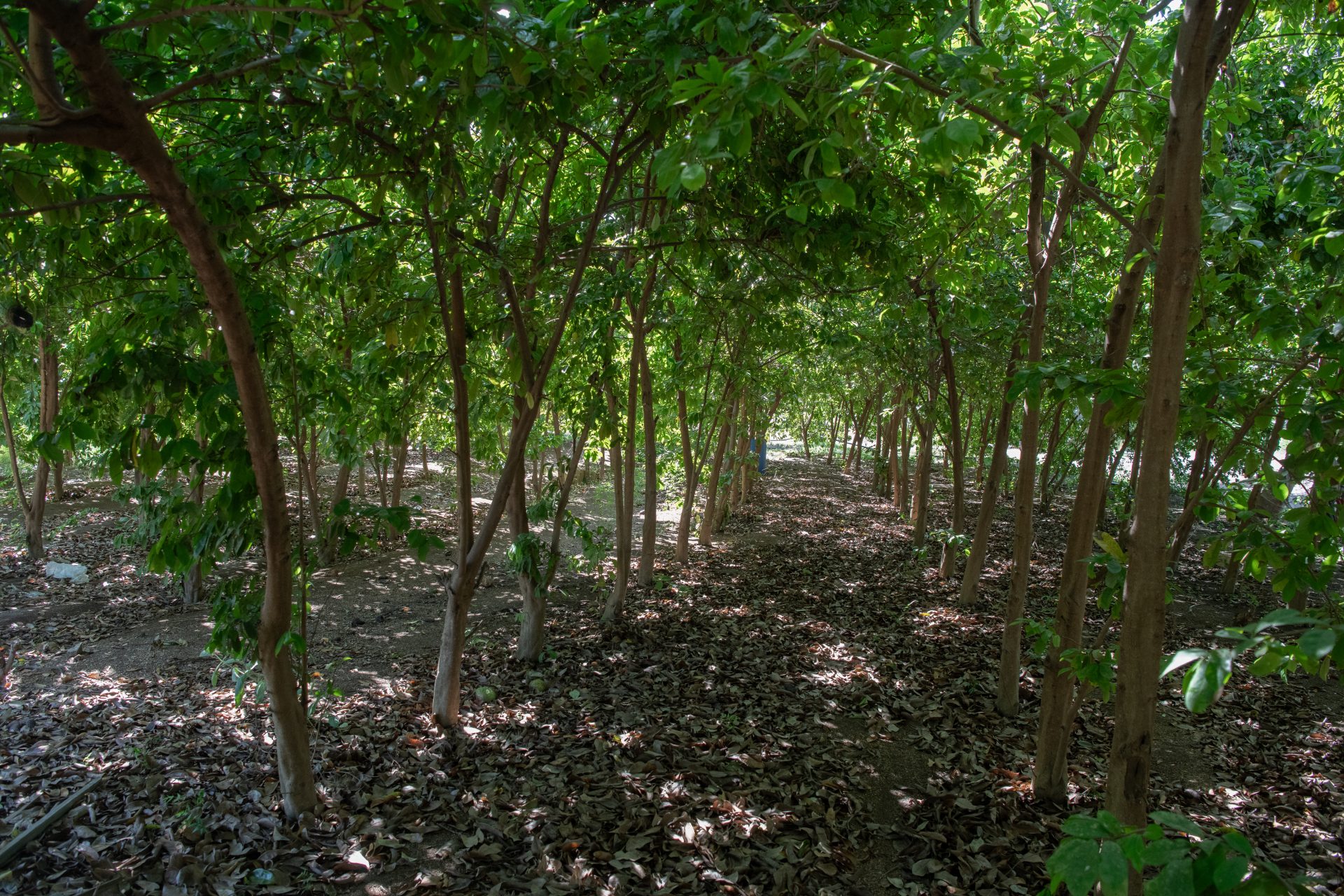
This is Hòfi Sòrsaka. The trees are lined up densely in rows. This soursop forest is beyond compare anywhere on Curaçao. Tico has pruned the lower branches so he can walk under the trees. It is nice and cool, down here in the shade. The leaves crunch under your feet, birds chirp and butterflies fly from tree to tree. This is his pride and joy.

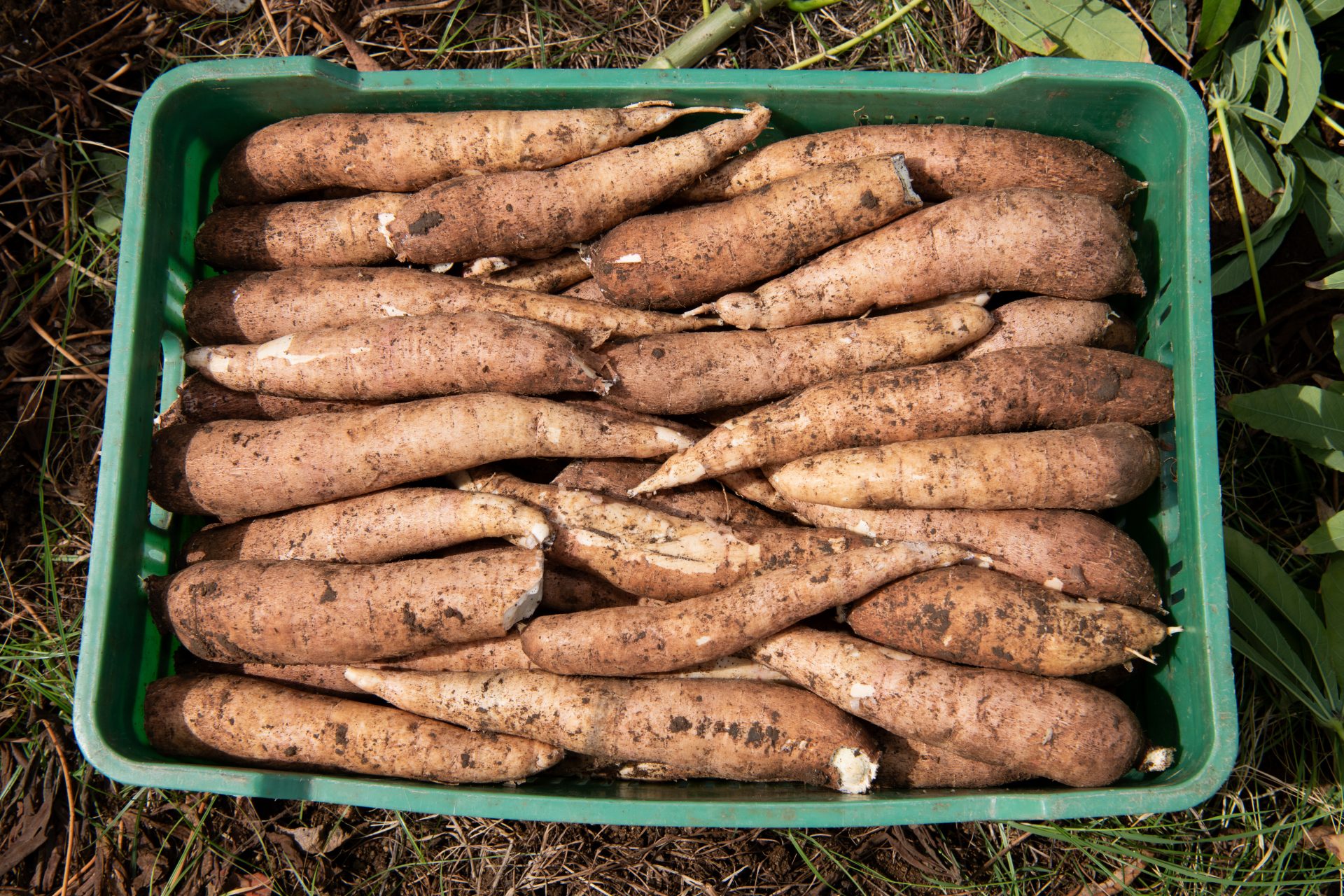
Tico started in 2008 on a small part of the site. Fifteen years later, at least three out of four hectares are cultivated. Planted with fruit trees, but also vegetables, such as sweet potato, cassava, Swiss chard, and spinach. The basic knowledge of vegetable and fruit cultivation he inherits from the older generations in his family – his father, his grandfather. He works and learns. So young, yet so experienced. Farmer Tico can do everything himself.

Tico never wants to leave here if he can help it. He is on his land every day, seven days a week, and mostly by himself. He’s used to it. He’s fine with it. No one to disturb him. That freedom, that peace. Dushi!

Delicious and healthy

“It is important to produce our own food. The quality is better than products from abroad. Fruits and vegetables in Curaçao often get more sun and less rain. They have more flavor and are healthier. Soursop is particularly medicinal, and so are lime grass and oregano, for example. I learned that from the elders in my family.”

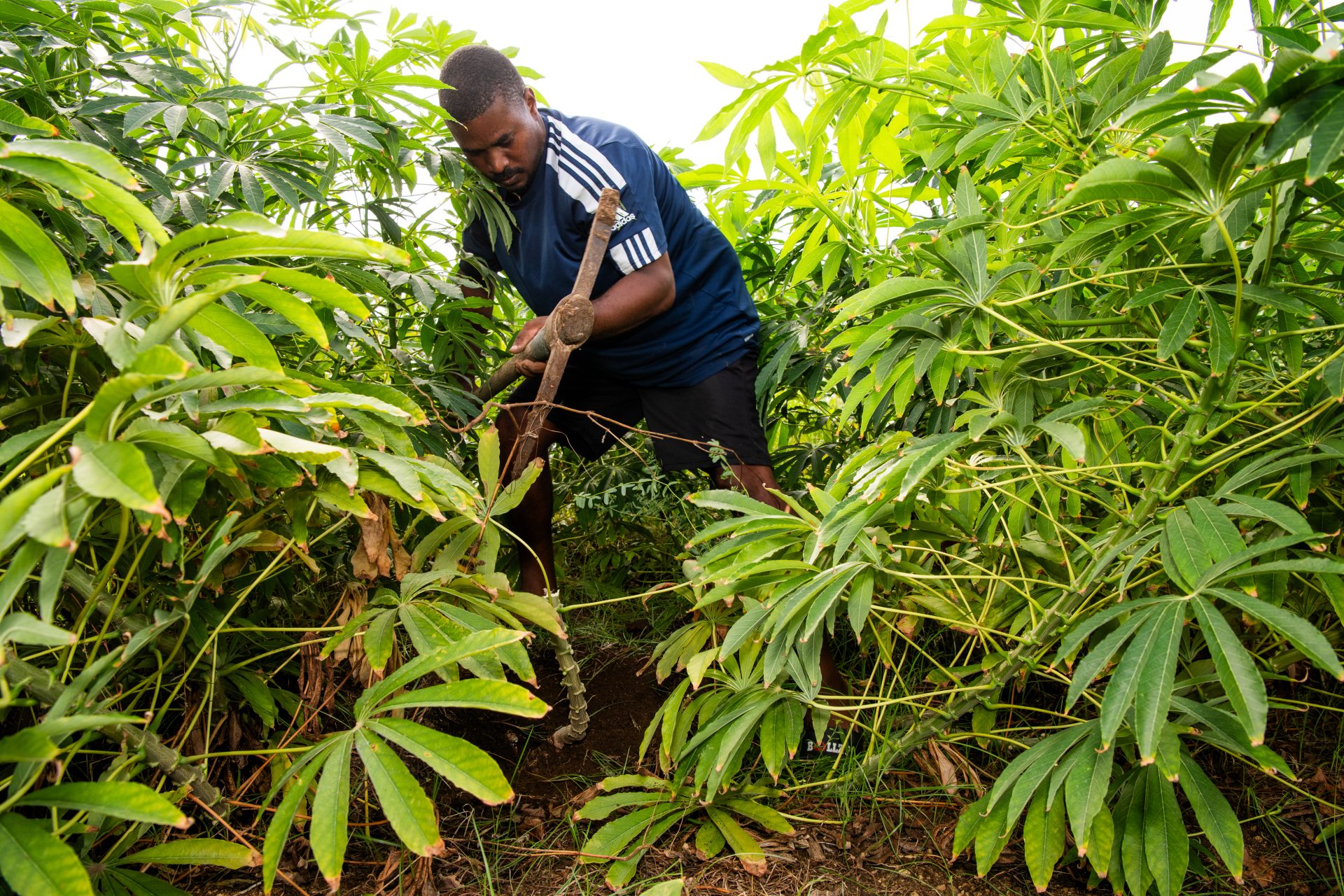
“I would like to plant more fruit trees. Medlar, cashew, shimaruku. People love those. There’s plenty of space and I can handle it by myself. I only ask for help with weeding sometimes. Keeping the land clean is the hardest work. We do this with all kinds of tools, such as a ‘chapi’ (hoe), ‘piki’ (pickaxe) and a shovel.”


Collaborate

“Selling doesn’t bring in much, but it’s enough. At least we eat healthy ourselves. The import of vegetables and fruits makes it difficult. I sell a cucumber for 1.75 guilders, but the supermarket gets it from abroad for just one guilder.”

“As farmers, we could collaborate more. We could make an inventory of the demand for products from large buyers and determine how much of each crop to plant. That would be better for the whole island, for everyone. This way, we could also have our voices heard by the government. Maybe then we can succeed in getting better prices for our produce and tools and materials.”

We, as farmers, should collaborate more.

Gilbertico Serberie -

Vitamin jungle

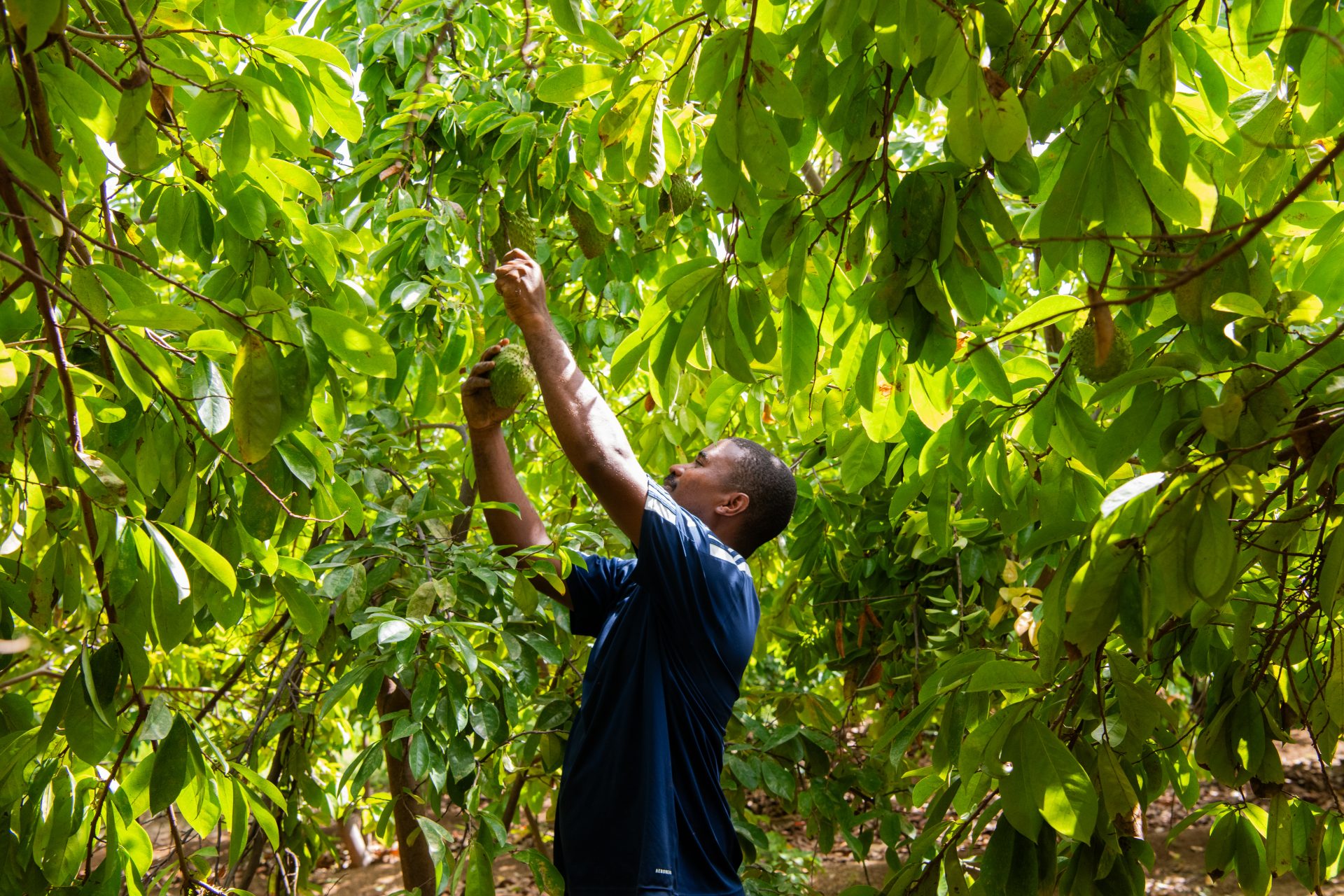
Fruit truly makes farmer Tico happy. “Sòrsaka!” he exclaims excitedly when he discovers a nice, ripe soursop. In Hòfi Sòrsaka, there are always ripe fruits hanging from the trees. Tico is a top supplier of vitamins.

On his plantation, soursop grows in two forests, row after row. A little further, it looks like a jungle: all those banana trees and coconut palms laden with heavy bunches of fruit. They are lined up too, like sturdy windbreaks, along the vegetable fields. Then there’s also papaya, lime, and watermelon.


Between all the fruit trees, bees fly back and forth, searching for nectar. During this search, they transfer pollen from the male to the female flowers. This is crucial; without pollination, there are no fruits. Tico has three beehives. When the honeycombs are full, he fills bottles with honey. He picked up this skill from an experienced beekeeper.

Hòfi Sòrsaka is a top supplier of vitamins.

Gilbertico Serberie -

Crop rotation

Among all the fruit trees are the vegetable fields. Tico grows almost everything you can find in the supermarket’s fresh produce section – from sweet potatoes, cassava, and Swiss chard to cucumbers, spinach, and peanuts. He now has a feel for what the demand is going to be, and he can supply most vegetables after about two or three months.

Tico never plants the same crop consecutively in a row on the same field. That’s an ironclad rule. He alternates crops that deplete the soil with vegetables that enrich it. For example, beans follow up on potatoes. The terrain is fully tilled and prepared. The remains of dead plants, like the leftovers from the harvest, go to the animals of a friend’s farm.

The bare terrain is plowed and rearranged. The crops grow in rows on raised soil ridges. Next to it are cannals, like trenches on the ground. Then everything is ready for the new planting. Another rule: what grows beneath the ground, like cassava and sweet potatoes, is planted during a full moon, and all other vegetables are planted when the moon is at its smallest. With this knowledge in mind, he plants a new batch of vegetables every two weeks. This way production continues non-stop.


“Some vegetables you can regrow from parts. The stem of cassava can be put back into the ground, just like the stem of spinach.”


“Until the energy is depleted. When tubers are smaller, the leaves are less attractive. Then you will know it’s time for a fresh start.”

Bathing time for plants

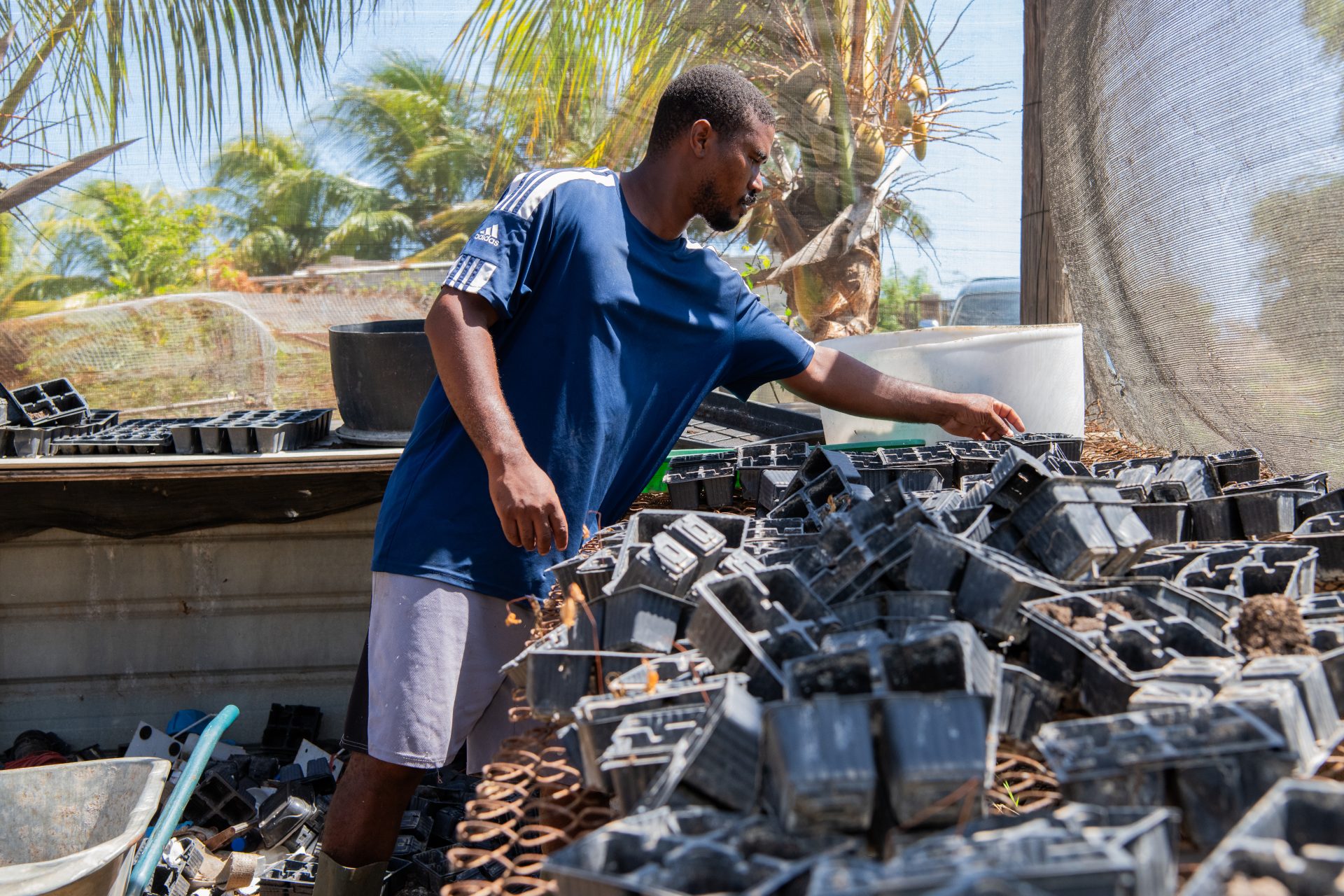
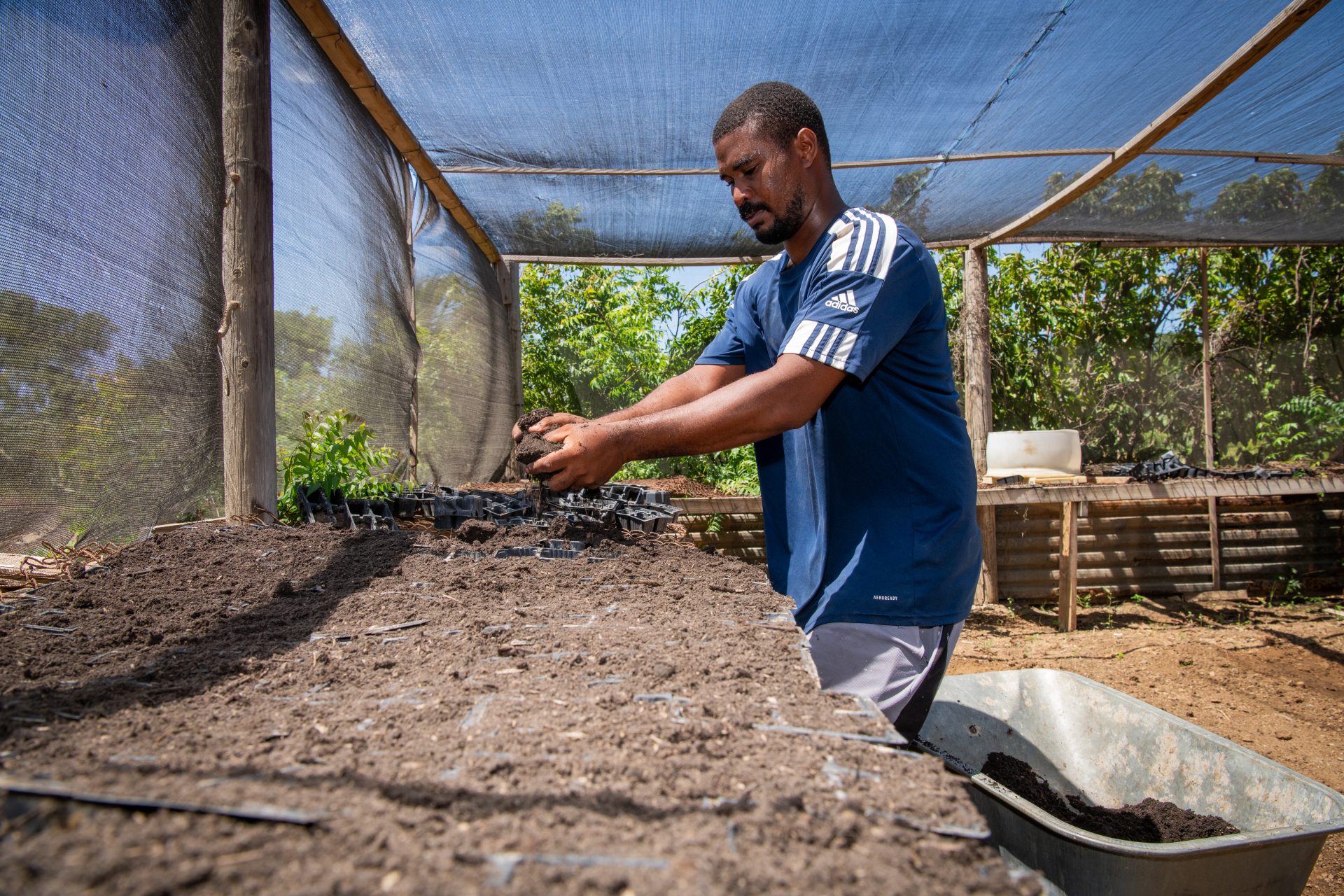
In a shade netting greenhouse, the next generation of vegetables grows. Tico has filled the seed trays with hundreds of seeds. With great patience and care he presses them one by one into the germination pots.

Once a week the plants in Hòfi Sòrsaka get a bath. Tico dissolves natural soap and disinfectant in water and sprays the leaves, trunks and stems clean with it. This is an effective way in the fight against vermin and bacteria.

Completely organic! He consciously chooses organic products to keep his plants in good condition. Pesticides and other chemical agents are poisonous to people and nature. Tico prefers to use alternatives that are not harmful, such as creolin, the juice of neem leaves and vinegar.

It is like top sport here on the plantation. That’s why there’s a weekly fertilizer boost. The goat and chicken manure comes from Ronde Klip. Then there are the tilapia fish in the rain tank. They provide extra nutrients in the water. Tico heard about it and gave it a try. With succes! The fish food is bought in the pet shop.

500 liters of water per day

Water is crucial. Every day the plantation gulps 500 liters of water. Groundwater is pumped from two wells to a large tank. The supply is sufficient to water all the plants every other day. The well water itself is free, but the fuel for the pump is a significant expense at 2,500 guilders per month.

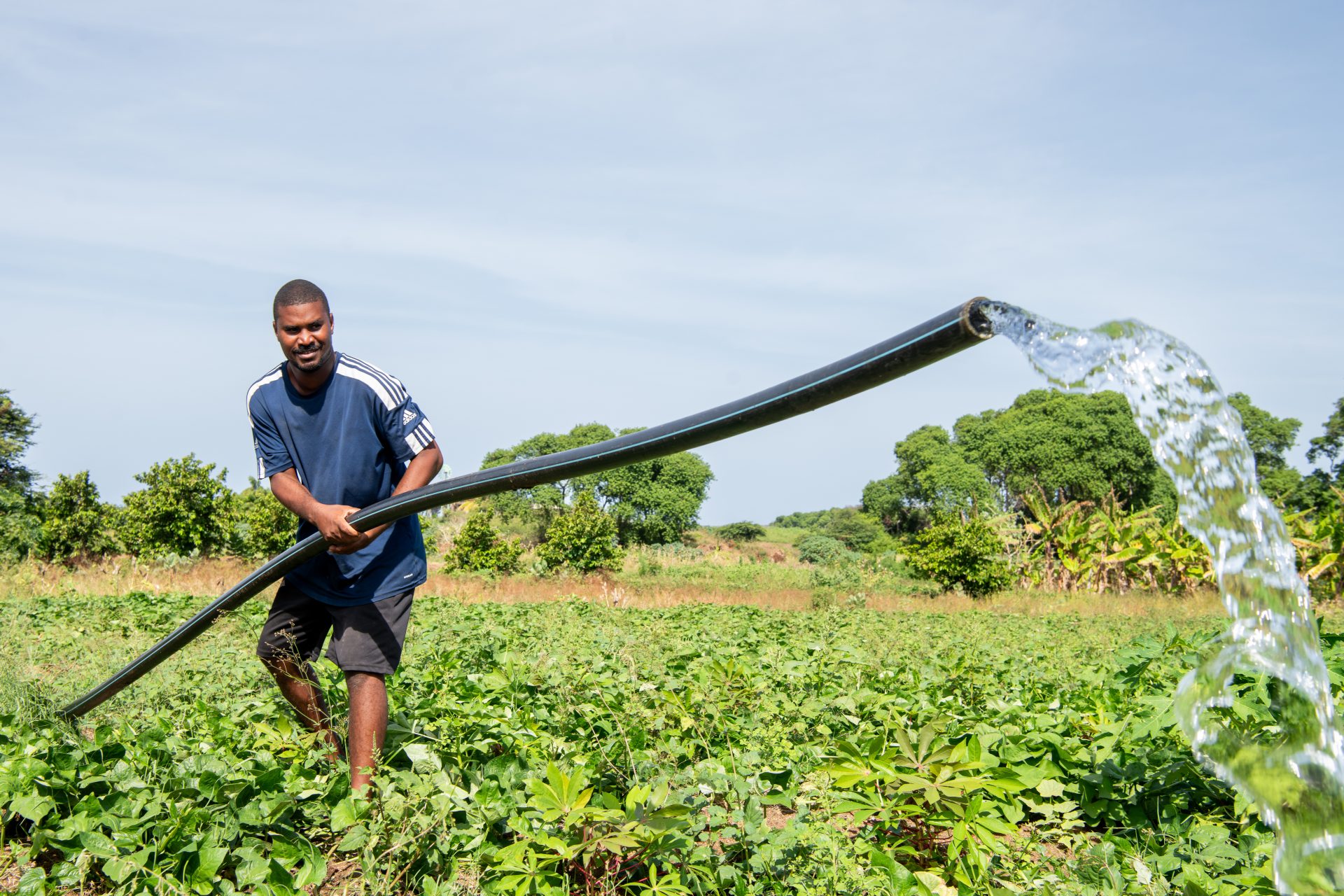
The water is directed from the tank to the land through a system of taps, pipes, and hoses. This is a time-consuming job. Open the tap and the water flows into the canal next to a row of crops. It fills up in about ten minutes. Close the tap, extend, and move the hose to the next trench.
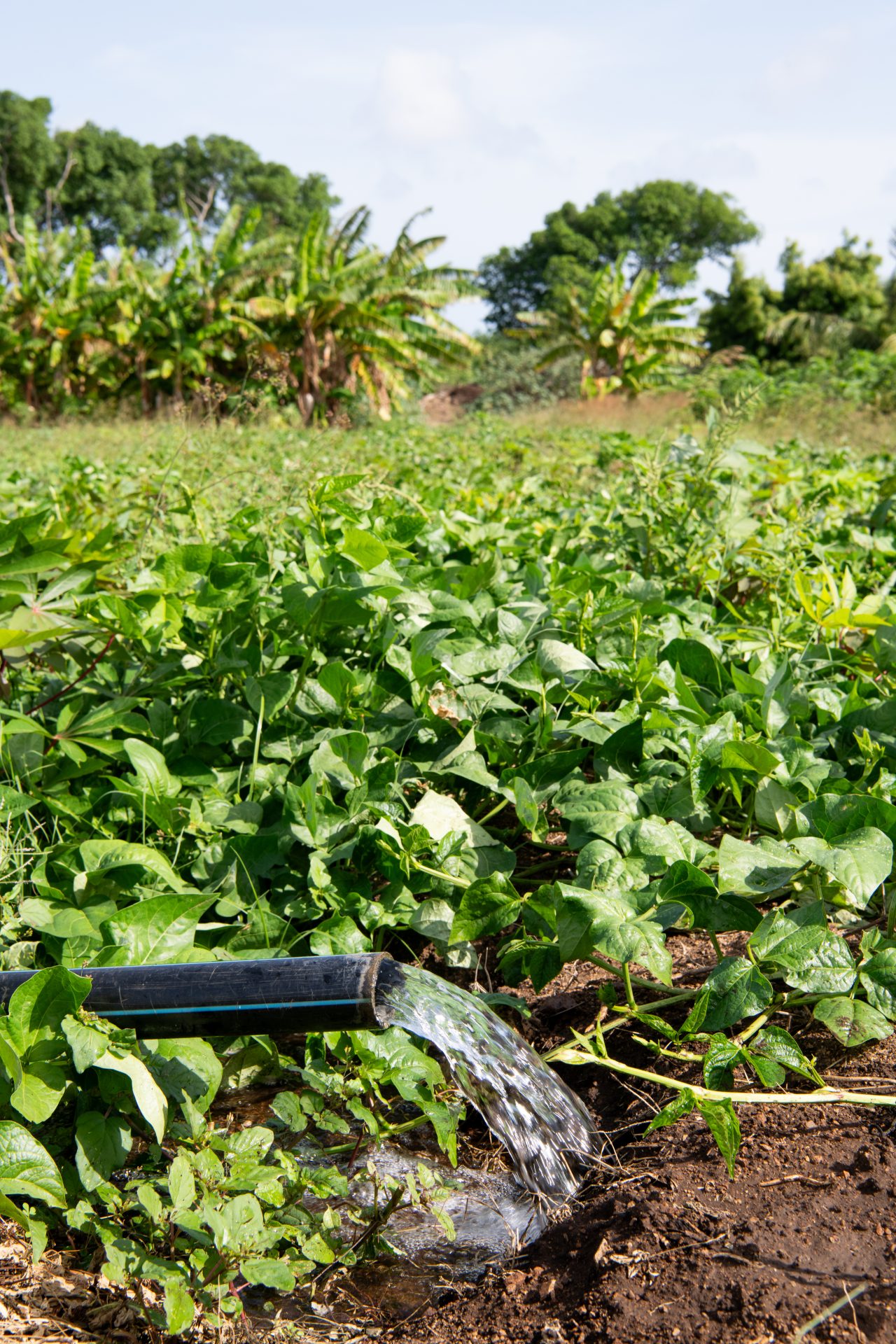
Tico had tried a drip irrigation system before. But the well water contains a lot of calcium, which clogged the hoses and drippers. It happened unnoticed, and part of the harvest was lost. Now he is back in control and ensures that his plants receive enough water.

Actually, as a farmer I can pretty much do everything myself.

Gilbertico Serberie -

Spinach

Contributes to your heart, bones, muscles & immune system.

Coconut

Supports your stamina and immune system.

Soursop

Strengthens the immune system, reducing inflammation, lowers blood pressure.

Banana

Keeps your muscles healthy and your bones strong.

Look, feel, taste

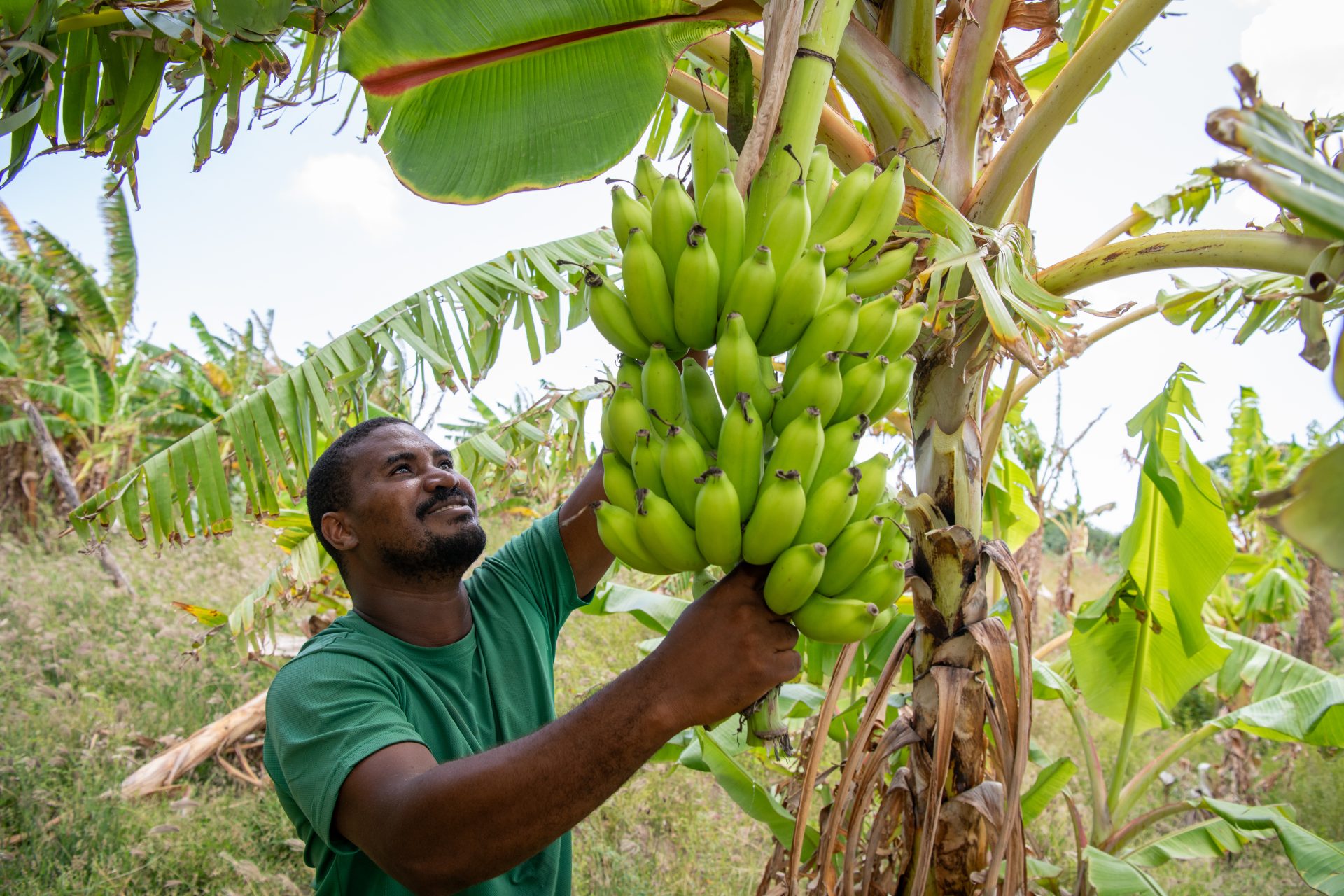
Look. At the size, the color. Feel. The fruit, the leaf. Taste. This is how Tico determines the right time to harvest. Not too early, not too late. He knows it right away. A soursop, beautifully light green with widely spaced spines. A ripe bunch of bananas. The sweet taste of the coconut. He picks them by hand using a ladder or with a special fruit picker.

Soursop is exceptionally medicinal.

Gilbertico Serberie -

Such an old coconut will become the mother of a new tree. After two or three months in the water tank, the seedling emerges. The very young tree is then placed in a bucket of soil or immediately into the ground. What grows underground takes more time. Sweet potato take about two months, cassava at least three, until the plant’s stem is meters high.

Space for the sprouts

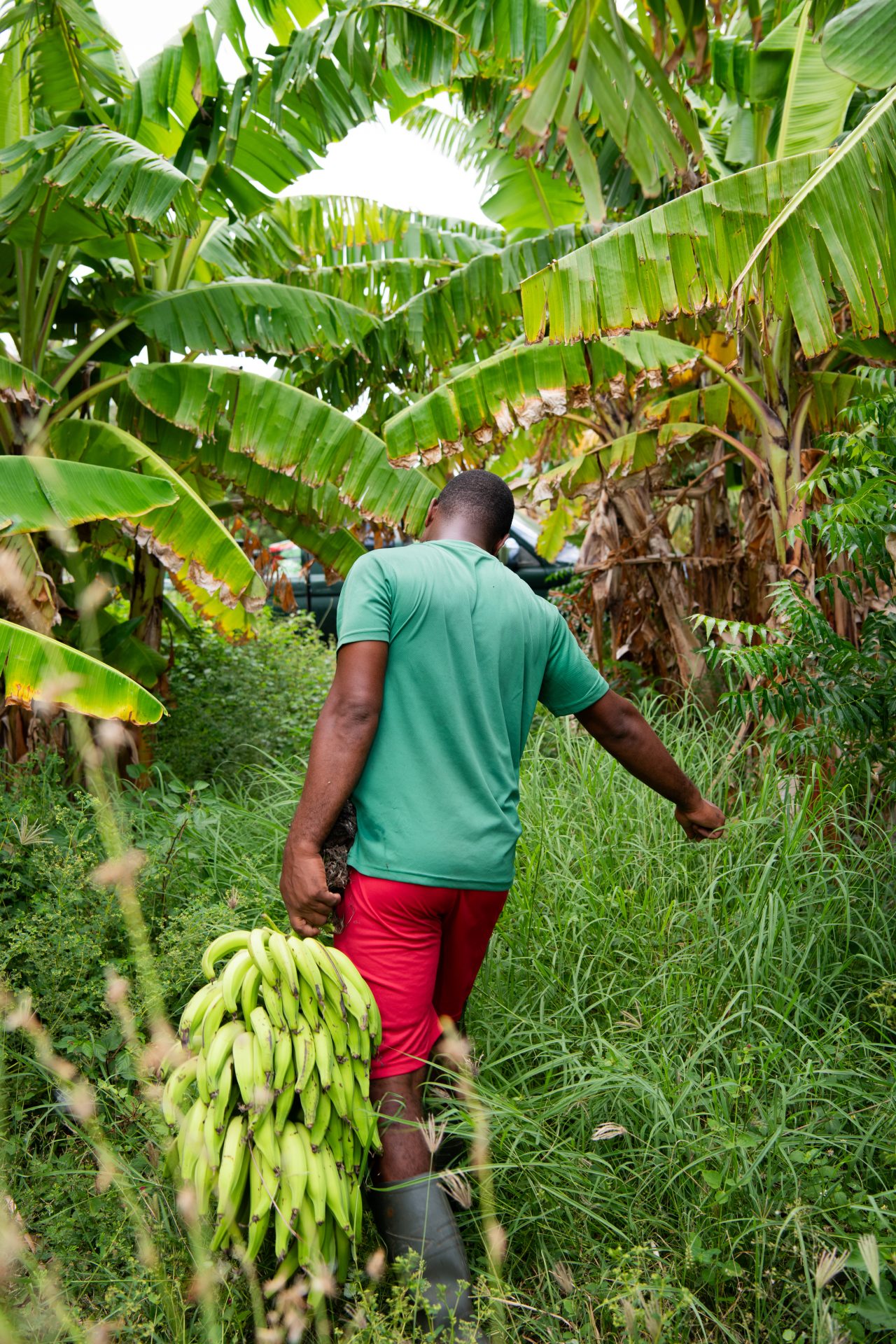
Tico has baking bananas, ‘banana’, and snack bananas, ‘bakoba’. Young banana tree sprouts pop up spontaneously in the field. They need space. Therefore, the old trees are cut down immediately after harvest.

Nutritious from the pan

A banana is soft and sweet, a healthy and flavorful snack. A baking banana is much firmer and should not be eaten raw. This is due to the amount of starch it contains. For this reason, this variety is less digestible. So, baking bananas are fried or boiled before consumption. They make an excellent substitute for potatoes or rice.


Leaf by leaf

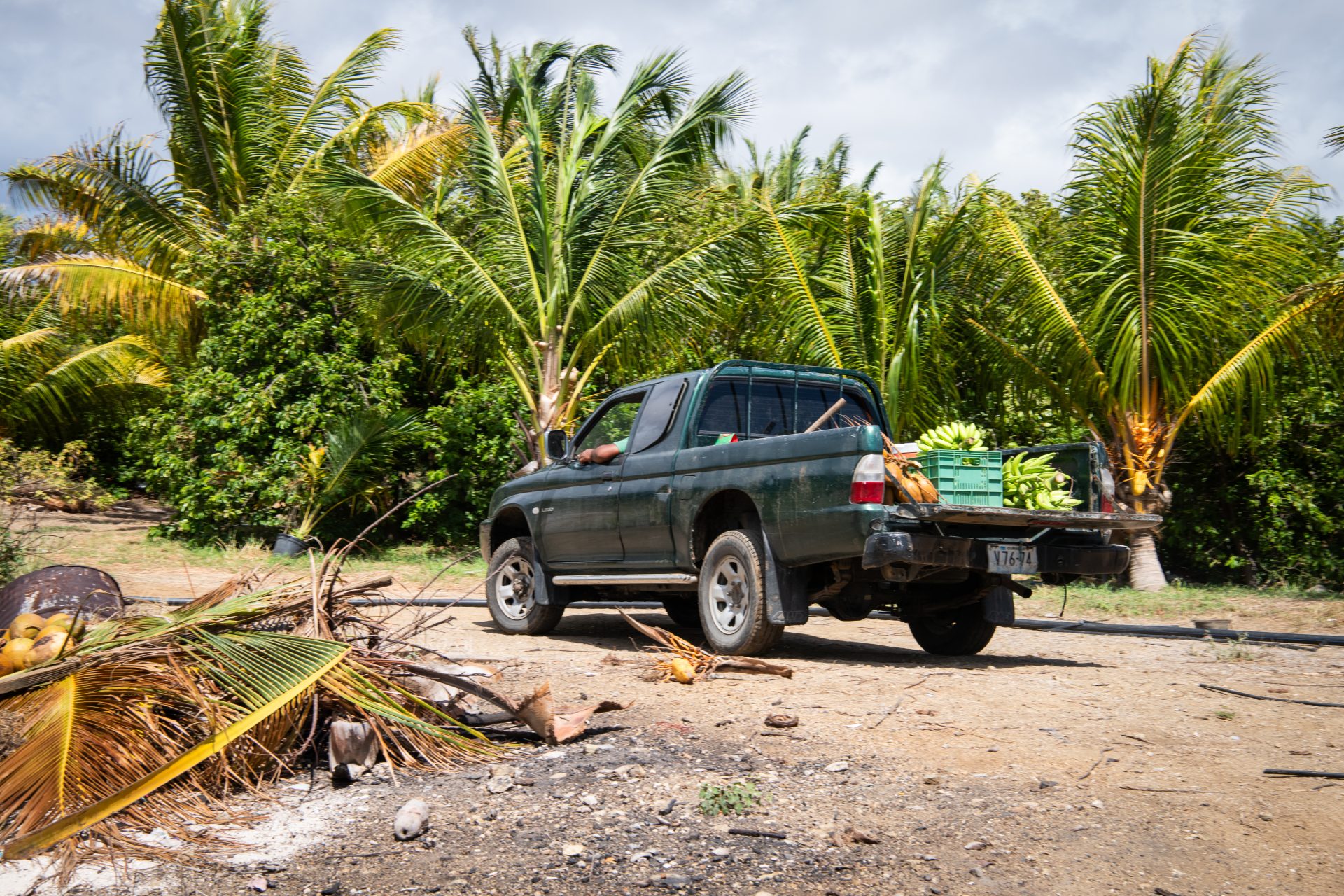
It’s the right moment for those fresh green spinach leaves. Tico picks them, one by one, and lays them in a crate. Concentrated, leaf by leaf. He picks from the outside in and leaves the tip of the long stem. This way, the plant stays alive. A gentle press, and the full crates are placed in the loading bay of the pick-up.

Hòfi Sòrsaka delivers to two to three regular customers weekly. They also have cruise ships as clients. The harvested vegetables and fruits can be on a cruise tourist’s plate the same day! On Sunday you will find Tico at the market in Barber, and every first Saturday of the month at Hòfi Kalebash. There, he primarily sells bananas and coconuts, but also other vegetables and fruits he harvested on Saturdays.

Love for nature

Tico Serberie believes it is important that children learn how to grow vegetables and fruits. “The development of a plant, the fruits that grow on a tree – it’s something amazing. You learn about the essence of life.”

Future generations will have more respect for nature and the elderly in society. This is very much needed. That love for one another. “If you learn to care for plants and animals at a young age, you can also do the same for people later on.”

More respect for nature is really necessary.

Gilbertico Serberie -

Watch! What our eleventh farmer, Gilbertico Serberie, has to say!

GET TO KNOW MORE FARMERS